

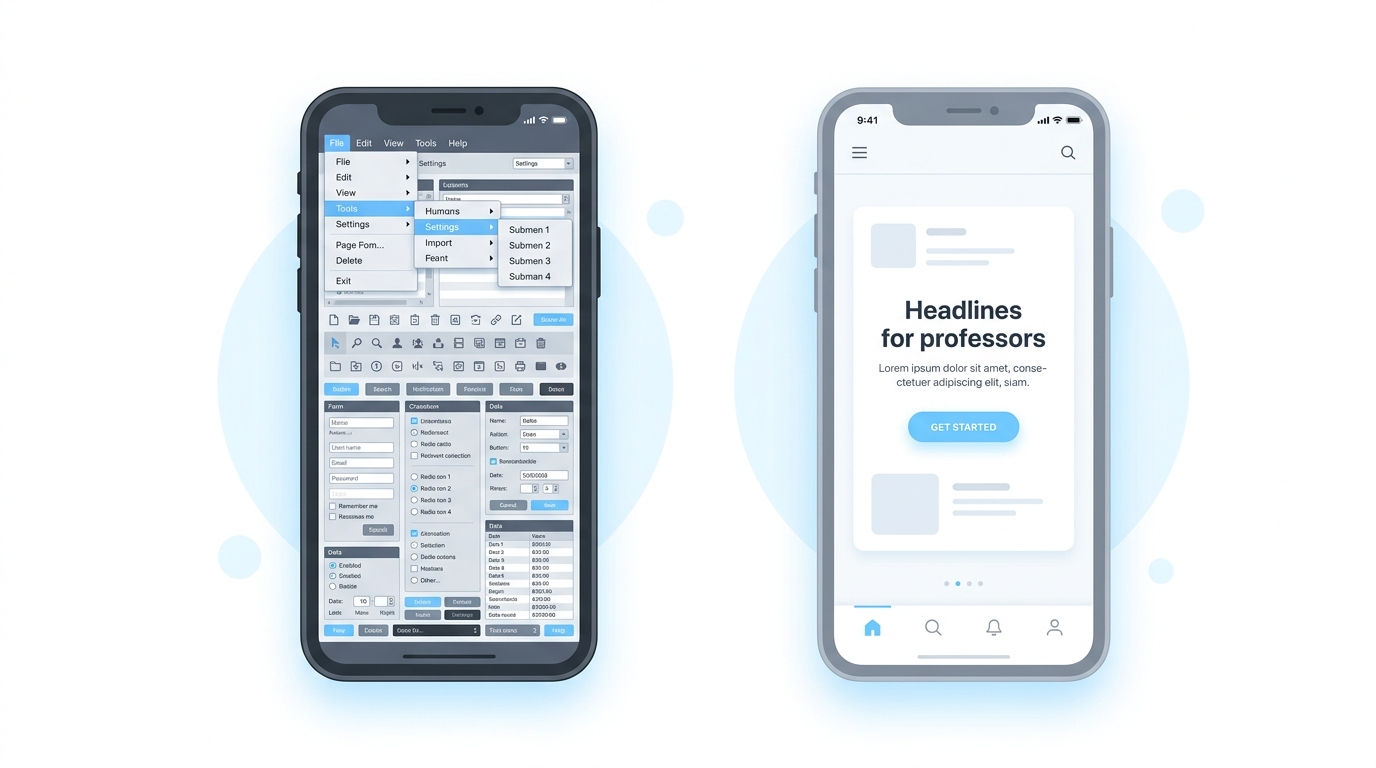
Why Simplicity Wins in App Design
One of the biggest misconceptions in digital product development is that adding more features automatically creates a better application.
In reality, users don't measure the quality of an app by the number of features it includes. They measure it by how easily they can accomplish their goals.
Whether someone is ordering food, booking an appointment, making a payment, or reading an article, they expect the experience to be fast, intuitive, and frustration-free.
That's where simplicity becomes one of the most valuable principles in app design.
Simple design doesn't mean your application has fewer capabilities. It means those capabilities are organized in a way that feels natural and easy to understand.
Why Simplicity Matters
People use mobile apps while commuting, working, shopping, or multitasking. They don't have time to learn a complicated interface.
If users have to think too much before completing a task, they're more likely to become frustrated and leave.
A simple interface helps users:
- Complete tasks faster.
- Make fewer mistakes.
- Learn the app more quickly.
- Feel confident while navigating.
- Return to the app more often.
The less effort users need to invest, the better their overall experience.
Signs Your App Is Too Complex
Many apps become difficult to use because new features are added over time without considering the overall user experience.
Common signs include:
- Too many menu options.
- Multiple actions on one screen.
- Inconsistent navigation.
- Small or difficult-to-read text.
- Confusing icons.
- Too many popups.
- Long forms with unnecessary fields.
These issues increase cognitive load and make simple tasks feel complicated.
Principles of Simple App Design
Focus on One Primary Action
Each screen should have a clear purpose. Avoid presenting users with too many choices at once.
Use Clear Navigation
Users should always know where they are and how to return to the previous screen.
Keep Interfaces Consistent
Buttons, colors, spacing, and typography should remain consistent throughout the app.
Use White Space Effectively
Empty space improves readability and helps users focus on important content.
Write Simple Labels
Avoid technical language. Use familiar words that users understand immediately.
Business Benefits of Simplicity
A clean and intuitive design benefits businesses as much as users.
Simple apps often experience:
- Higher user satisfaction.
- Better customer retention.
- Increased conversions.
- Lower support requests.
- Faster onboarding.
- Stronger brand perception.
- Better app store ratings.
Investing in simplicity often delivers measurable business results.
Final Thoughts
The best apps don't impress users by showing everything they can do at once.
They impress users by making every interaction feel effortless.
When you remove unnecessary complexity, users can focus on what matters most—achieving their goals quickly and confidently.
In app design, simplicity isn't about doing less.
It's about designing better.
Frequently Asked Questions
Does a simple design mean fewer features?
No. It means organizing features in a way that is easy to understand and use.
Why do users prefer simple apps?
Simple apps reduce confusion, save time, and make tasks easier to complete.
Can simplicity improve business results?
Yes. Better usability often leads to higher engagement, improved retention, better reviews, and increased conversions.
How can I simplify my app?
Focus on essential features, reduce unnecessary elements, maintain consistent navigation, and test your design with real users.
Blog CTA
A great app doesn't need more screens or more buttons—it needs a better experience.
At GoTech Studio, we design clean, intuitive mobile applications that help businesses increase user satisfaction, improve engagement, and build products people enjoy using.
Planning your next app? Let's build a simple, modern, and user-focused experience together.