
Why Security Builds Customer Trust in Mobile Apps
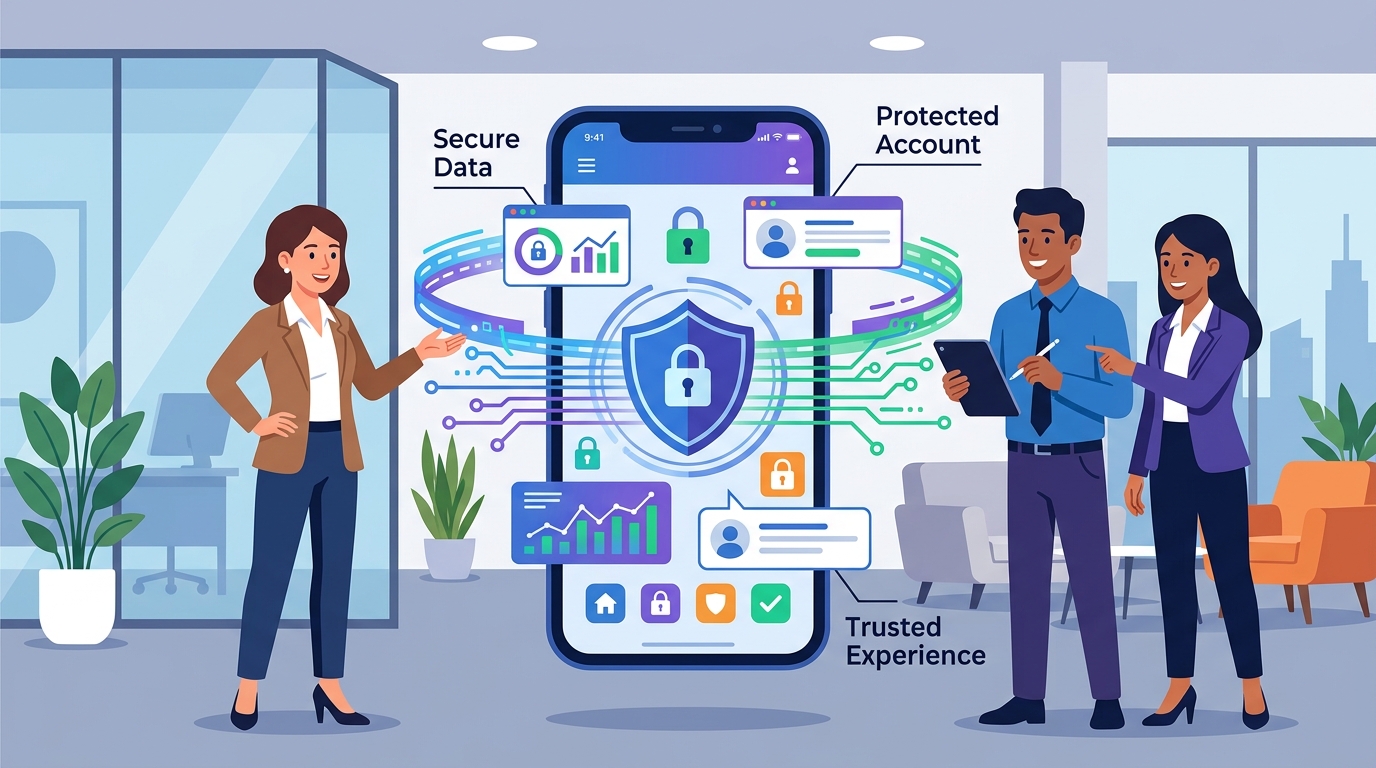
When customers download a mobile application, they aren't simply using software.
They are trusting a business.
They may provide their name, email address, phone number, location, payment information, messages, documents, or other personal information.
That creates an important responsibility for businesses: protecting customer data and creating a secure experience.
App security is often viewed as a technical requirement that developers need to handle behind the scenes. But its impact goes much further.
Security directly affects how customers perceive your business.
A secure application can increase confidence, while a security incident can damage trust that took years to build.
Why Customers Care About Security
Most users aren't software engineers.
They may not understand encryption, authentication protocols, API security, or database permissions.
But they understand the feeling of being safe.
When customers know that their account and personal information are protected, they're more comfortable using the application.
This becomes especially important for apps involving:
- Payments
- Banking
- Healthcare
- E-commerce
- Job applications
- Messaging
- Business data
- Personal documents
The more sensitive the information, the more important trust becomes.
Security Is Part of the Customer Experience
Security isn't completely separate from UX.
Consider two applications.
The first application has a beautiful interface but frequently logs users out, exposes confusing security warnings, and doesn't clearly explain how data is protected.
The second application provides secure login, clear privacy information, reliable account recovery, and smooth authentication.
Even if users don't understand the technical implementation, they can feel the difference.
Good security should work quietly in the background while giving users confidence when they need it.
Key Security Practices for Mobile Apps
Secure Authentication
Authentication ensures that users are actually who they claim to be.
Depending on the application, this may include:
- Strong passwords
- Secure session management
- Multi-factor authentication
- Email or phone verification
- Secure account recovery
The goal is to prevent unauthorized access while keeping the login experience practical.
Protecting Data
Sensitive information should be handled carefully both when it is being transmitted and when it is stored.
Businesses should consider appropriate encryption and secure storage mechanisms based on the type of data being handled.
Reducing unnecessary data collection is also an important part of security.
If you don't need certain information, consider whether it should be collected at all.
Secure APIs
Modern mobile applications often communicate with backend servers through APIs.
These APIs may handle:
- User accounts
- Payments
- Messages
- Orders
- Profiles
- Business information
An API should not automatically trust requests just because they come from a mobile application.
Proper authentication, authorization, validation, rate limiting, and access controls help reduce security risks.
Access Control
Not every user should have access to everything.
For example, a business application may have:
- Customers
- Employees
- Managers
- Administrators
Each role should only have access to the information and actions necessary for that role.
Strong access control helps prevent unauthorized data access.
Regular Updates Matter
Security isn't something you implement once and forget.
Mobile applications depend on:
- Operating systems
- Frameworks
- Libraries
- APIs
- Cloud services
- Databases
Security vulnerabilities can be discovered over time.
Regular maintenance allows businesses to update dependencies, address vulnerabilities, and improve the application's overall security posture.
Security Builds Long-Term Trust
Customer trust takes time to develop.
A customer may start using your application because of its features or pricing.
But they continue using it because they trust the product.
For example, an e-commerce customer needs confidence that:
- Their account is protected.
- Their payment information is handled securely.
- Their personal information isn't unnecessarily exposed.
- Their orders are safe.
If customers don't feel secure, even a great product can struggle to retain users.
What Happens When Security Is Ignored?
Ignoring security can create serious consequences.
Potential problems include:
- Unauthorized account access.
- Data exposure.
- Financial losses.
- Fraud.
- Service disruption.
- Legal and compliance issues.
- Negative publicity.
- Loss of customer trust.
The financial cost can be significant, but the reputational damage can be even harder to recover from.
Security Should Start Before Development
Security should not be something added at the very end of a project.
It should be considered during:
Planning
Identify what data the application will collect and what risks need to be addressed.
Design
Create secure user flows and account management processes.
Development
Implement appropriate authentication, authorization, validation, and secure communication.
Testing
Look for vulnerabilities and unexpected access paths.
Deployment
Secure the production environment and infrastructure.
Maintenance
Continue updating dependencies and addressing new security risks.
This approach is much stronger than trying to fix security problems after launch.
Don't Collect Data You Don't Need
One simple security principle is often overlooked:
Collect only the information your application genuinely needs.
If an app doesn't need a particular piece of personal information, collecting it may create unnecessary risk.
Reducing unnecessary data can simplify:
- Storage
- Security
- Compliance
- Privacy management
- Data protection
A simpler data strategy can often be a safer one.
Security Can Become a Competitive Advantage
Strong security isn't only about avoiding problems.
It can also help businesses differentiate themselves.
When customers see that a company takes privacy and security seriously, it can increase confidence in the product.
For businesses operating in competitive markets, trust can become an important reason why customers choose one service over another.
Building Trust Through Transparency
Security and privacy should not be hidden behind complicated technical language.
Businesses can build confidence by clearly communicating:
- What information is collected.
- Why it is collected.
- How accounts are protected.
- How users can manage their information.
- How users can contact support about security concerns.
Transparency makes customers feel more informed and respected.
Final Thoughts
A great mobile application needs more than attractive design and useful features.
It needs to make customers feel confident.
Security protects customer information, reduces risk, and helps businesses build long-term relationships with their users.
The strongest apps don't treat security as an afterthought.
They build security into the product from the beginning.
Because customers aren't only asking:
"Does this app work?"
They're also asking:
"Can I trust this app?"
And that trust can determine whether they stay.
Frequently Asked Questions
Why does app security affect customer trust?
Customers want confidence that their accounts and personal information are protected. Strong security practices help create that confidence.
What is the most important security feature in an app?
There isn't one single feature. Strong authentication, authorization, secure communication, protected data storage, validation, and regular security updates all contribute to a secure application.
Should security be added after the app is built?
No. Security should be considered throughout planning, design, development, testing, deployment, and maintenance.
Can app security improve customer retention?
Yes. Customers are more likely to continue using services they trust, especially when the application handles sensitive personal or financial information.
Does a small business need strong app security?
Absolutely. Security risks aren't limited to large companies. Any application that handles user information should take appropriate security measures.
Blog CTA
Your customers trust your business every time they create an account, send information, make a payment, or use your services through your application.
That trust should be protected.
At GoTech Studio, we build mobile applications with security, reliability, performance, and long-term scalability in mind. From secure authentication and APIs to ongoing updates and maintenance, we help businesses create applications their customers can confidently use.
Planning a secure mobile app for your business? Contact GoTech Studio and let's build it with security from day one.