

Why Businesses Should Think About Scalability From Day One
Launching a mobile app is an exciting milestone, but many businesses focus only on getting the first version into users' hands. While speed to market is important, long-term success depends on something many startups overlook: scalability.
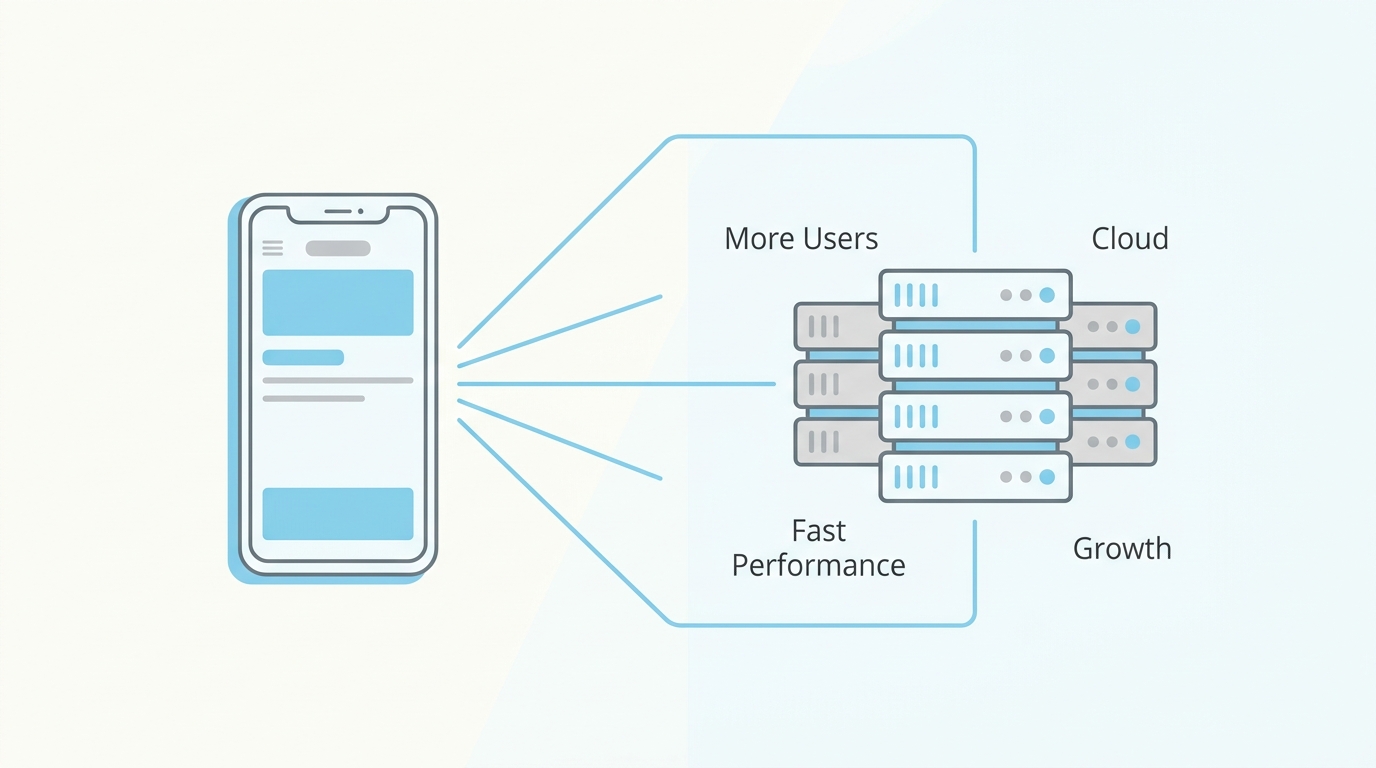
Scalability is the ability of your application to handle increasing numbers of users, transactions, and data without sacrificing speed, reliability, or user experience. A scalable app doesn't just survive growth—it embraces it.
Whether you're building an e-commerce platform, a healthcare solution, a social networking app, or a business management tool, planning for scalability from the beginning can save significant time, money, and technical effort later.
What Is Scalability?
Scalability refers to designing software that can continue performing well as demand increases.
For example:
- An online store that handles hundreds of orders today should also be able to handle thousands during a holiday sale.
- A food delivery app should continue working smoothly as new cities and restaurants are added.
- A social platform should remain responsive as more users upload photos, videos, and messages.
Instead of rebuilding your system every time your business grows, a scalable architecture allows your application to expand efficiently.
Why Scalability Matters
Growth is the goal of every business.
If your app becomes popular, the number of users, requests, and stored data can increase rapidly.
Without proper planning, this growth may lead to:
- Slow loading times.
- Server crashes.
- Database bottlenecks.
- Failed payments.
- Lost customer trust.
- Negative reviews.
- Higher emergency development costs.
Scalability helps prevent these issues before they affect your customers.
Benefits of Building a Scalable Application
Better Performance
Users expect fast, responsive apps regardless of how many people are online. A scalable system distributes workloads efficiently, keeping response times low.
Reduced Downtime
Applications designed for growth can handle traffic spikes more effectively, reducing the risk of outages during promotions, product launches, or seasonal demand.
Lower Long-Term Costs
Planning for scalability early is often less expensive than rebuilding your infrastructure after experiencing performance problems.
Improved Customer Experience
Fast and reliable apps encourage users to stay engaged, leave positive reviews, and recommend your product to others.
Faster Feature Expansion
A well-structured architecture makes it easier to introduce new features without disrupting existing functionality.
Key Elements of a Scalable Architecture
Cloud Infrastructure
Cloud platforms allow businesses to increase computing resources as demand grows, rather than relying on a single physical server.
Efficient Database Design
Well-designed databases support faster queries, better indexing, and easier expansion as data volumes increase.
API-First Development
Modern APIs enable mobile apps, web applications, and third-party services to communicate efficiently while supporting future integrations.
Modular Development
Breaking software into smaller, independent components makes updates, maintenance, and scaling more manageable.
Performance Monitoring
Monitoring tools help identify bottlenecks before they become serious problems, allowing teams to optimize continuously.
Common Mistakes Businesses Make
Many businesses unintentionally limit future growth by:
- Building everything into one large application.
- Ignoring database optimization.
- Hosting everything on a single server.
- Writing code that's difficult to maintain.
- Skipping performance testing.
- Assuming growth will happen slowly.
These shortcuts may work initially but often create expensive technical debt.
Signs Your App Is Ready to Scale
A scalable application typically includes:
- Fast response times under heavy traffic.
- Reliable cloud infrastructure.
- Optimized database queries.
- Secure authentication systems.
- Modular architecture.
- Automated backups.
- Continuous monitoring.
- Load balancing where appropriate.
These foundations help ensure the app can grow confidently.
Planning for the Future
Scalability isn't just about handling more users.
It's also about supporting:
- New countries.
- Additional languages.
- More payment gateways.
- New products or services.
- Business partnerships.
- Advanced analytics.
- Artificial intelligence features.
- Expanding development teams.
Designing with flexibility today makes future innovation much easier.
Final Thoughts
Every successful business hopes to grow, but growth should never become the reason your application struggles.
By thinking about scalability from the beginning, businesses can build software that remains reliable, secure, and high-performing as demand increases.
A scalable application isn't simply prepared for more users—it's prepared for more opportunities.
Investing in the right architecture today helps your business grow with confidence tomorrow.
Frequently Asked Questions
What does scalability mean in app development?
Scalability is the ability of an application to handle increasing users, data, and traffic while maintaining performance and reliability.
Why should startups think about scalability early?
Planning for scalability early reduces future redevelopment costs, improves reliability, and prepares the application for business growth.
Does every business need a scalable app?
If you expect your business to grow over time, building with scalability in mind is a smart investment that helps avoid future technical challenges.
Is scalability only about servers?
No. Scalability includes application architecture, database design, APIs, cloud infrastructure, security, monitoring, and overall system design.
Blog CTA
Business growth should be exciting—not stressful. By building a scalable application from the start, you create a strong foundation that supports more users, new features, and future expansion without compromising performance.
At GoTech Studio, we design and develop scalable mobile apps and software solutions with modern architecture, cloud-ready infrastructure, optimized databases, and future-focused development practices. Whether you're launching an MVP or planning a large-scale platform, we build solutions that are ready to grow with your business.
Ready to build an app that's designed for long-term success? Contact GoTech Studio and let's create a scalable solution together.