

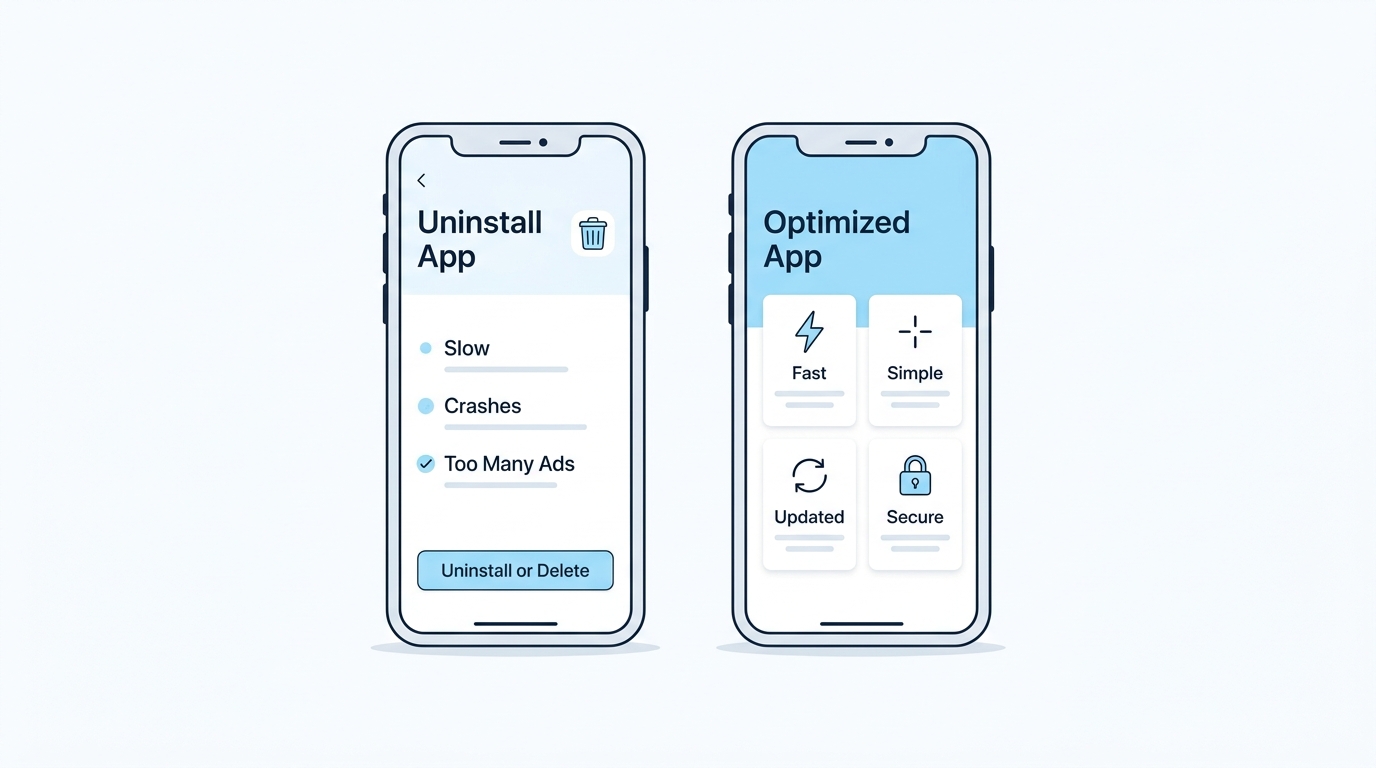
What Makes Users Delete an App? 7 Common Reasons Businesses Should Know
Publishing an app on the App Store or Google Play is an exciting achievement. Downloads begin to increase, new users install your app, and everything seems to be moving in the right direction.
But downloads alone don't guarantee success.
The real measure of a successful app is how many people continue using it weeks and months after installation.
Many businesses focus heavily on attracting new users but overlook the importance of retention. If users uninstall your app after a few days, every marketing campaign becomes more expensive because you're constantly replacing lost users instead of building a loyal audience.
Understanding why people delete apps is the first step toward building a product they genuinely enjoy using.
1. Slow Performance
Speed is one of the biggest factors affecting user satisfaction.
If your app takes too long to open, freezes while loading content, or responds slowly to user actions, frustration builds quickly.
Modern users expect apps to respond almost instantly.
Improving app performance through optimization, efficient coding, and faster APIs can dramatically improve retention.
2. Frequent Bugs and Crashes
Even one unexpected crash can damage a user's confidence.
Repeated crashes often lead people to believe the app is unreliable.
Regular testing, crash monitoring, and timely bug fixes are essential for maintaining a stable experience.
A stable app builds trust.
3. Too Many Ads
Advertising can generate revenue, but poor implementation often drives users away.
Common mistakes include:
- Full-screen ads appearing too often.
- Ads interrupting important tasks.
- Difficult-to-close advertisements.
- Ads displayed before users experience the app's value.
Advertising should support the business without disrupting the user experience.
4. Poor User Experience
Users shouldn't need instructions to complete simple tasks.
Confusing navigation, inconsistent layouts, hidden features, and complicated forms increase frustration.
Good UX helps users achieve their goals quickly and confidently.
Simple navigation often outperforms feature-heavy interfaces.
5. Forced Registration
Many users simply want to explore an app before creating an account.
Requiring registration immediately can create unnecessary friction.
Whenever possible, allow users to experience your product first and request sign-up only when it provides clear value, such as saving progress or making a purchase.
6. High Battery or Data Usage
Users pay attention to apps that drain battery life or consume excessive mobile data.
Optimizing background processes, reducing unnecessary network requests, and compressing media can significantly improve the overall experience.
Efficient apps are more likely to stay installed.
7. No Updates
Users expect apps to improve over time.
Regular updates demonstrate that the business actively supports its product.
Updates should focus on:
- Bug fixes.
- Performance improvements.
- Security enhancements.
- New features.
- Compatibility with the latest devices.
Consistent maintenance encourages long-term trust.
How to Improve User Retention
Keeping users engaged requires continuous improvement.
Focus on:
- Fast performance.
- Reliable stability.
- Simple navigation.
- Clean interface design.
- Meaningful updates.
- Listening to user feedback.
- Strong security.
- Helpful onboarding.
- Responsive customer support.
Retention is built through many small improvements rather than one major feature.
Why Retention Matters
Acquiring new users often costs significantly more than keeping existing ones.
Users who remain engaged are more likely to:
- Make purchases.
- Recommend your app.
- Leave positive reviews.
- Subscribe to premium services.
- Become long-term customers.
A small improvement in retention can have a meaningful impact on business growth.
Final Thoughts
Downloads create opportunities, but retention creates success.
Every slow screen, confusing interaction, or unresolved bug increases the chance that someone will uninstall your app.
Businesses that prioritize performance, usability, reliability, and continuous improvement build products users trust and return to.
The best apps don't simply attract users.
They give users a reason to stay.
Frequently Asked Questions
Why do users uninstall mobile apps?
The most common reasons include poor performance, crashes, confusing navigation, excessive advertising, forced registration, battery drain, and a lack of updates.
How can businesses reduce app uninstall rates?
Focus on fast performance, intuitive design, regular maintenance, meaningful updates, and listening to customer feedback.
Are app downloads more important than user retention?
Downloads are important for growth, but retention determines long-term success. An app that users continue using creates more value than one with many installs but frequent uninstalls.
How often should an app be updated?
Updates should be released whenever there are important bug fixes, security improvements, compatibility changes, or valuable new features. Regular updates also show users that the app is actively maintained.
Blog CTA
Every uninstall is valuable feedback. Understanding why users leave helps you create a better product that keeps people engaged for the long term.
At GoTech Studio, we build mobile applications that focus on performance, clean UI/UX, stability, and continuous improvement. Whether you're creating a new app or improving an existing one, our team can help you deliver an experience users want to keep.
Ready to build an app users won't want to delete? Let's create it together with GoTech Studio.