
How to Use Push Notifications Without Annoying Your Users
Push notifications are one of the most effective communication tools available in mobile applications. They allow businesses to reconnect with users, share important updates, promote offers, and encourage engagement—even when the app isn't open.
However, there is a fine line between being helpful and becoming disruptive.
A poorly planned notification strategy can frustrate users, leading them to mute notifications or uninstall the app altogether. On the other hand, thoughtful, personalized notifications can strengthen customer relationships and increase long-term engagement.
The key is to focus on relevance rather than volume.
Why Push Notifications Matter
Users don't open every app every day. Push notifications provide an opportunity to remind them about valuable actions or updates.
When used strategically, notifications can:
- Increase daily active users.
- Improve customer retention.
- Encourage repeat purchases.
- Remind users about unfinished tasks.
- Deliver timely updates.
- Strengthen customer loyalty.
- Improve overall engagement.
The most successful notifications are those that help users achieve something they already care about.
Types of Push Notifications
Not every notification serves the same purpose. Understanding the different categories helps businesses create a balanced strategy.
Transactional Notifications
These provide important updates about user activity.
Examples include:
- Order confirmations.
- Payment receipts.
- Delivery updates.
- Password reset requests.
- Booking confirmations.
These are expected and generally appreciated by users.
Reminder Notifications
Reminders help users remember important events or actions.
Examples:
- Upcoming appointments.
- Subscription renewals.
- Bill payment reminders.
- Event notifications.
- Incomplete registrations.
Useful reminders reduce missed actions and improve user satisfaction.
Engagement Notifications
These encourage users to return to the app.
Examples:
- New messages.
- Friend requests.
- New comments.
- New followers.
- Daily learning reminders.
These should always provide meaningful value rather than simply increasing app opens.
Promotional Notifications
Promotional messages are useful when carefully targeted.
Examples include:
- Limited-time discounts.
- Product launches.
- Seasonal offers.
- Loyalty rewards.
- Exclusive member deals.
Sending too many promotional notifications can quickly reduce engagement.
Best Practices for Push Notifications
1. Personalize Every Message
Users respond better to notifications that feel relevant.
Instead of sending the same message to everyone, personalize content using:
- User name.
- Purchase history.
- Location.
- Interests.
- Recent activity.
Personalized notifications often achieve significantly higher engagement.
2. Send Notifications at the Right Time
Timing matters as much as the message itself.
Sending notifications during work hours, late at night, or while users are busy can reduce effectiveness.
Analyze user behavior to identify the times when your audience is most active.
3. Keep Messages Short
Users should understand the purpose of the notification within seconds.
Focus on:
- Clear language.
- One primary message.
- A simple call to action.
Avoid lengthy or confusing text.
4. Avoid Notification Fatigue
One of the biggest mistakes businesses make is sending too many notifications.
When users receive constant interruptions, they often:
- Disable notifications.
- Ignore messages.
- Uninstall the app.
Quality is far more important than quantity.
5. Let Users Choose
Provide notification preferences inside your app.
Allow users to control:
- Promotions.
- News.
- Order updates.
- Messages.
- Reminders.
Giving users control increases trust and reduces frustration.
Common Mistakes Businesses Make
Many businesses unintentionally reduce engagement by:
- Sending generic messages.
- Sending notifications too frequently.
- Delivering irrelevant promotions.
- Using misleading headlines.
- Interrupting users at inconvenient times.
- Ignoring user preferences.
These mistakes often have the opposite effect of what businesses intend.
Measuring Success
A successful notification strategy should be measured through analytics.
Track metrics such as:
- Open rate.
- Click-through rate.
- Conversion rate.
- Retention rate.
- Opt-out rate.
- User engagement after receiving notifications.
These insights help refine future campaigns.
Real-World Examples
Effective notifications include:
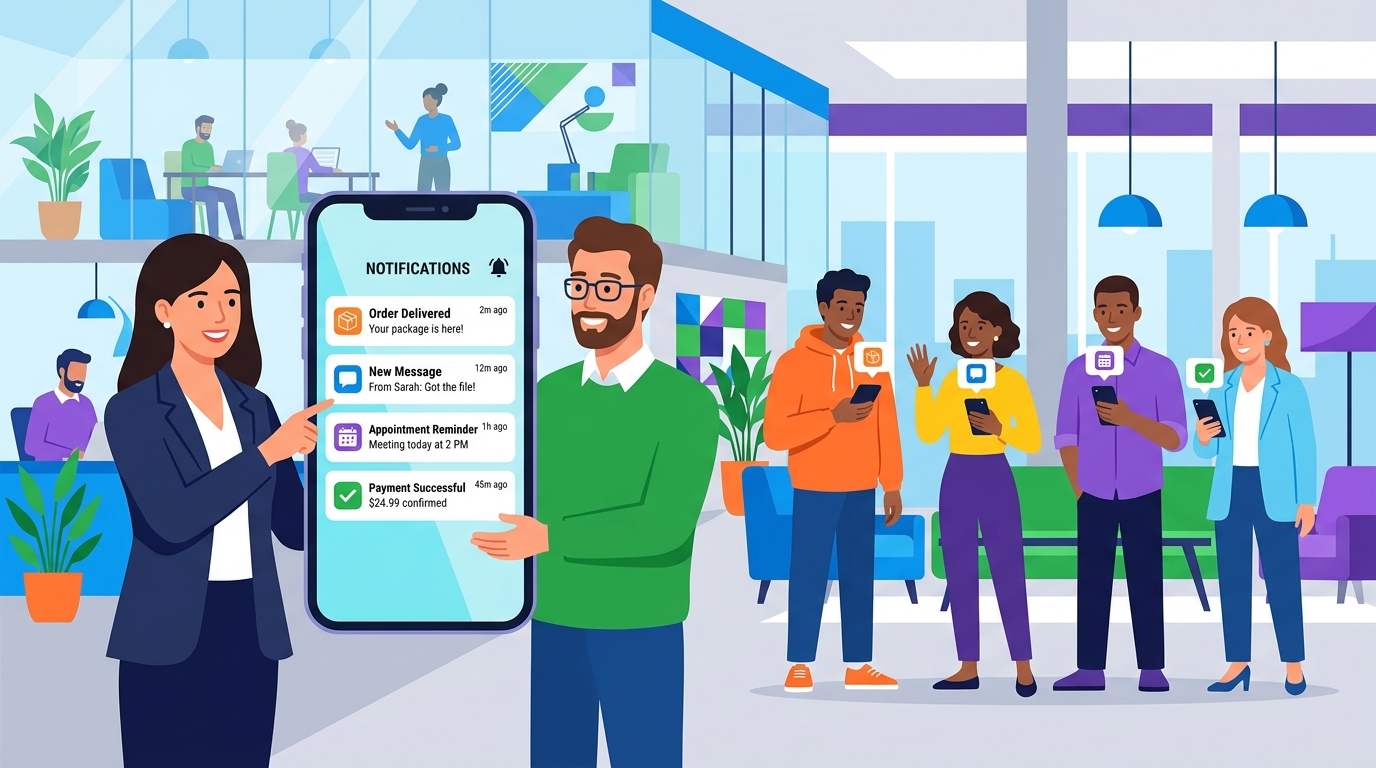
- "Your order has been delivered."
- "Your appointment starts in 30 minutes."
- "A new message is waiting for you."
- "Your payment was successful."
Less effective examples include:
- "Open our app now!"
- "Don't miss this!"
- "Sale! Sale! Sale!"
- "We haven't seen you."
Helpful notifications solve problems. Spam creates them.
Final Thoughts
Push notifications should feel like a helpful assistant—not constant interruptions.
Businesses that prioritize relevance, personalization, and timing create stronger customer relationships and higher engagement.
Every notification should have a clear purpose and deliver genuine value.
When users trust your notifications, they're far more likely to interact with your app and remain loyal over time.
Frequently Asked Questions
How many push notifications should an app send?
There is no universal number. The ideal frequency depends on your app type, but every notification should provide clear value rather than simply increasing activity.
Why do users disable notifications?
The most common reasons include receiving too many notifications, irrelevant messages, poor timing, and repetitive promotions.
Are personalized notifications more effective?
Yes. Notifications based on user behavior, preferences, or activity are generally more relevant and achieve higher engagement than generic messages.
Can push notifications improve retention?
Absolutely. Timely reminders, transactional updates, and personalized engagement messages can encourage users to return to your app and stay active.
Blog CTA
Push notifications are one of the simplest ways to improve engagement—when they're designed with the user in mind. A thoughtful notification strategy can increase retention, build trust, and create a better overall app experience.
At GoTech Studio, we develop mobile applications with intelligent notification systems, user segmentation, personalized messaging, and analytics-driven engagement strategies. Our goal is to help businesses communicate effectively without overwhelming their users.
Want to build a mobile app with smarter notifications and better user engagement? Contact GoTech Studio and let's create an experience your users will appreciate.