

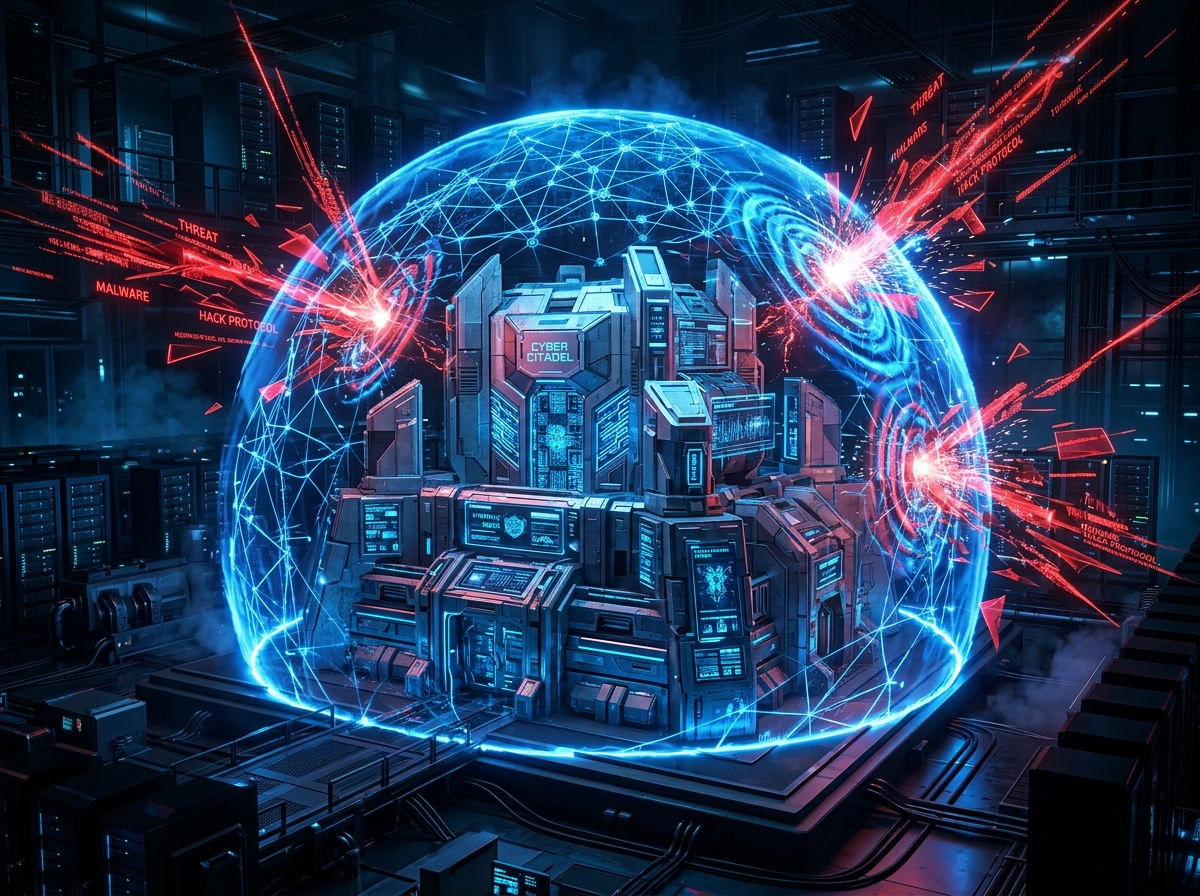
Cybersecurity in 2026 is an arms race between AI-powered attackers and AI-powered defenders. The attack surface has expanded with remote work, IoT devices, and cloud migration. Here's the current threat landscape and how organizations are responding.
The AI Threat Landscape
Deepfake Phishing
Attackers now use AI-generated voice and video to impersonate executives. A CFO receives a video call from their "CEO" authorizing a wire transfer. The deepfake is convincing enough to fool voice recognition systems. Incidents increased 300% in 2025.
Automated Vulnerability Exploitation
AI scans code repositories, identifies vulnerabilities, and generates exploits faster than human researchers. Zero-day vulnerabilities are exploited within hours of disclosure rather than days. Patch management has become a race against machines.
Adaptive Malware
Traditional malware follows static patterns. AI-powered malware mutates its code to evade signature-based detection. It learns from defensive responses and adjusts tactics in real-time. Static defenses are increasingly ineffective.
Supply Chain Poisoning
Attackers target open-source libraries, injecting malicious code into popular packages. AI helps identify widely-used dependencies with weak maintenance, making supply chain attacks more precise and devastating.
AI-Powered Defense Strategies
Behavioral Analytics
AI monitors user behavior baselines—typing patterns, mouse movements, access times. Anomalies trigger immediate authentication challenges. This catches compromised credentials even when passwords are correct.
Autonomous Threat Hunting
AI agents continuously scan networks for indicators of compromise. They correlate logs across systems, identify attack chains, and recommend remediation steps. Human analysts focus on strategic decisions rather than alert triage.
Predictive Patching
AI analyzes code commits, vulnerability databases, and exploit trends to predict which systems are most likely to be attacked. Organizations prioritize patches based on actual risk rather than severity scores alone.
Deception Technology
AI-generated honeypots mimic real systems with convincing data. Attackers waste time on fake assets while defenders study their techniques. Dynamic deception adapts to attacker behavior in real-time.
Zero Trust Architecture
The perimeter is dead. Zero Trust assumes every access request is potentially hostile. AI evaluates context—device health, user behavior, location, time—before granting access. Continuous verification replaces one-time authentication.
Regulatory Landscape
The EU AI Act classifies cybersecurity AI as high-risk, requiring transparency and human oversight. The US Cybersecurity Framework 2.0 mandates AI risk assessments for critical infrastructure. Compliance is no longer optional.
Key Statistics
-
Average data breach cost: $4.88 million (IBM 2026 report)
-
Ransomware attacks: 45% of organizations experienced at least one attempt
-
AI-powered security tools adoption: 78% of enterprises
-
Mean time to detect breaches: 187 days (down from 287 in 2024)
Best Practices for 2026
-
Assume breach: Design systems that contain damage when (not if) compromised
-
AI red teaming: Regularly test your AI defenses with adversarial attacks
-
Human-AI collaboration: Use AI for scale, humans for judgment
-
Supply chain verification: Audit every dependency, not just direct ones
-
Continuous training: Security awareness must evolve as fast as threats
Conclusion
Cybersecurity in 2026 requires accepting that AI is now central to both attack and defense. Organizations that integrate AI security tools while maintaining human oversight will navigate this landscape successfully. Those relying on 2020-era defenses are already behind.