
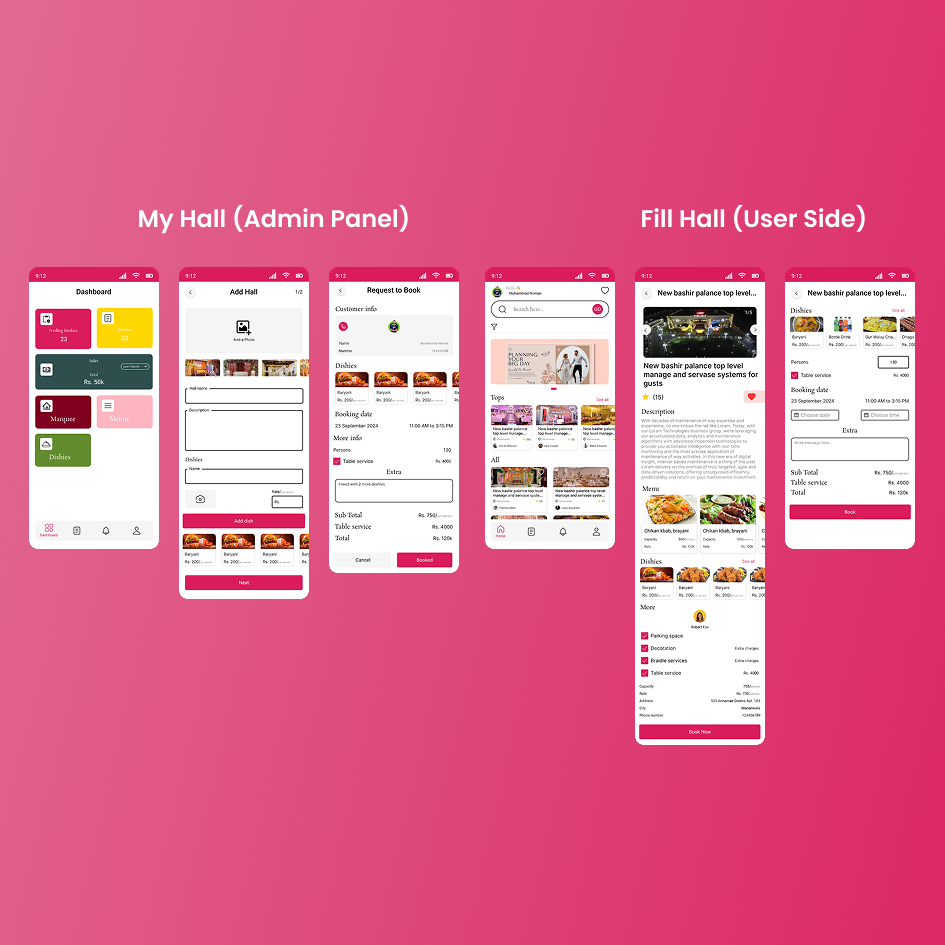
The event venue industry operated on phone calls and paper ledgers. Our client saw an opportunity to digitize this fragmented market. FillHall became a two-sided marketplace connecting marquee owners with customers seeking banquet halls.
Understanding the Market
We conducted interviews with 30+ venue owners and 50+ event planners. Key pain points emerged: double bookings, lack of pricing transparency, and no digital payment options. Customers wanted photos, availability calendars, and instant booking confirmation.
Technical Architecture Node.js
powered our REST API, handling concurrent booking requests efficiently. MySQL stored relational data—venues, bookings, users, payments—with careful indexing for search performance. Docker Compose standardized our development environment across the team.
The Booking Engine
The core challenge was real-time availability. We implemented optimistic locking to prevent double bookings. A calendar synchronization system blocked dates instantly upon payment confirmation. Owners received SMS and email alerts for new bookings.
Payment Integration
We integrated Stripe for secure card processing and supported local payment methods. Escrow functionality held funds until event completion, protecting both parties. Automated invoicing and receipt generation reduced administrative overhead.
Mobile Experience
The Kotlin Android app featured high-resolution venue galleries, map-based search, and filter options (capacity, price, amenities). An intuitive booking flow guided users from search to confirmation in under 3 minutes.
Owner Dashboard
Venue owners accessed a web dashboard for calendar management, pricing updates, and analytics. They could see booking trends, revenue forecasts, and customer demographics. This data-driven approach helped owners optimize pricing.
Quality Assurance
We tested booking flows with real transactions in sandbox mode. Load testing simulated 1000 concurrent users during peak wedding season. Security audits ensured PCI-DSS compliance for payment handling.
Results
-
120+ venues onboarded in the first 6 months
-
85% reduction in booking administration time for owners
-
4.8-star app rating with 10,000+ active users
-
40% increase in venue occupancy rates
Key Takeaways
Two-sided marketplaces require balancing supply and demand features carefully. We initially focused too heavily on the customer experience and had to enhance owner tools based on feedback. Real-time synchronization is critical for inventory-based platforms.
Conclusion
FillHall shows how digital transformation creates value in traditional industries. By addressing real operational pain points with modern technology, we built a platform that benefits both venue owners and customers.