

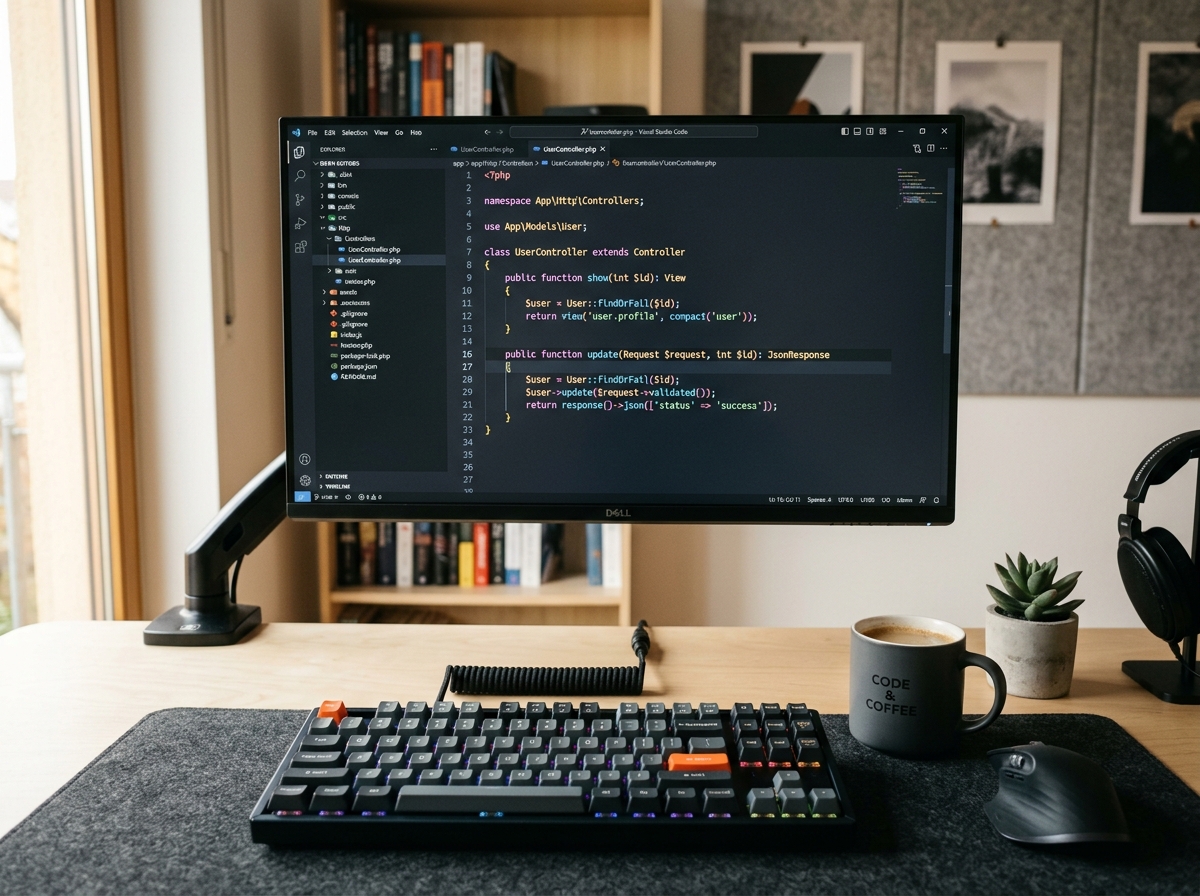
Clean code isn't just about aesthetics—it's about reducing technical debt and making your applications scalable. Whether you're building a custom WordPress plugin or an enterprise SaaS platform, these PHP best practices will elevate your development workflow.
1. Follow PSR Standards
Adopt PHP-FIG's PSR-1 (Basic Coding Standard) and PSR-12 (Extended Coding Style). These standards ensure consistent formatting across teams and projects. Use tools like PHP_CodeSniffer to automatically enforce these rules.
2. Use Type Declarations
PHP 7.4+ introduced typed properties, and PHP 8.0 brought union types. Always declare types for function parameters, return values, and class properties. This catches bugs at compile time rather than runtime.
3. Embrace Dependency Injection
Stop using global variables and static methods. Use constructor injection to pass dependencies. This makes your code testable, modular, and follows the SOLID principles. Frameworks like Laravel and Symfony make this effortless.
4. Leverage Namespaces
Organize your code with namespaces to avoid naming collisions. Follow PSR-4 autoloading standards so your classes map directly to your directory structure. This eliminates the need for manual
require statements.5. Handle Errors with Exceptions
Replace error-prone functions with exception handling. Create custom exception classes for different error types. This makes debugging easier and allows calling code to handle specific failure modes gracefully.
6. Write Unit Tests
Use PHPUnit to write tests for critical business logic. Aim for at least 80% code coverage. Test-driven development (TDD) isn't just a buzzword—it prevents regressions and documents your code's expected behavior.
7. Use Prepared Statements
Never concatenate user input into SQL queries. Always use PDO or MySQLi with prepared statements to prevent SQL injection attacks. This is non-negotiable for security.
8. Implement Logging
Use Monolog or similar libraries to log errors, warnings, and debug information. In production, log to files or external services like Sentry. Never display errors to users—it's a security risk and poor UX.
9. Optimize Database Queries
Use EXPLAIN to analyze slow queries. Add indexes to frequently searched columns. Avoid N+1 query problems by using eager loading in ORMs. Cache frequently accessed data with Redis or Memcached.
10. Document with PHPDoc
Write PHPDoc blocks for all classes, methods, and functions. Document parameters, return types, and thrown exceptions. Tools like PHPStan and Psalm use these annotations for static analysis.
Conclusion
Clean PHP code is an investment in your project's future. These practices reduce bugs, speed up onboarding for new developers, and make scaling your application painless. Start with one or two practices and gradually incorporate the rest into your workflow.